External restoration
Brickwork, elevations, paths, railings, garden walls.
A house's front is the part of it that everyone sees. Painted brick, broken railings, cracked concrete paths, garden walls falling apart — the kerb appeal of a Victorian terrace is something specific, and getting it right means working in the right materials, in the right way.
External restoration covers the work on the outside of a house — front elevation, garden walls, paths, railings, gates, repointing, brickwork, sandstone, threshold steps. Often a project on its own, sometimes the first stage of a bigger refurbishment.
The work is properly specialist. Stocks need to be sourced from a salvage merchant or a brickworks that still makes them. Lime mortar needs the right sand and the right ratio. Encaustic tile paths need to be hand-laid. Cast iron railings need to be made or salvaged, not bought from a chain. We do all of this and we know the suppliers.
The way we work on every external restoration project.
Sourced correctly
Stocks from salvage. Reds matched to the existing course. Sandstone caps matched to the local vernacular. Tile from a maker who still fires encaustic in the original way.
Lime, not cement
Solid-wall Victorians need lime mortar. We point in lime, mixed to the right ratio for the brick and the wall thickness.
Hand-laid where it counts
Encaustic tile paths are hand-laid in pattern. Brick paths are laid by hand in the right bond. Threshold steps are bedded properly in mortar, level the first time.
Cast iron, not aluminium
Railings and gates in cast iron, made to match originals or salvaged from period houses. Hinged off the brickwork. Painted in the right finish.
Conservation-aware
Front elevations are usually a planning matter in a Conservation Area. We check before we quote, get the consents in place where needed, and work within them.
Recent external restoration work.
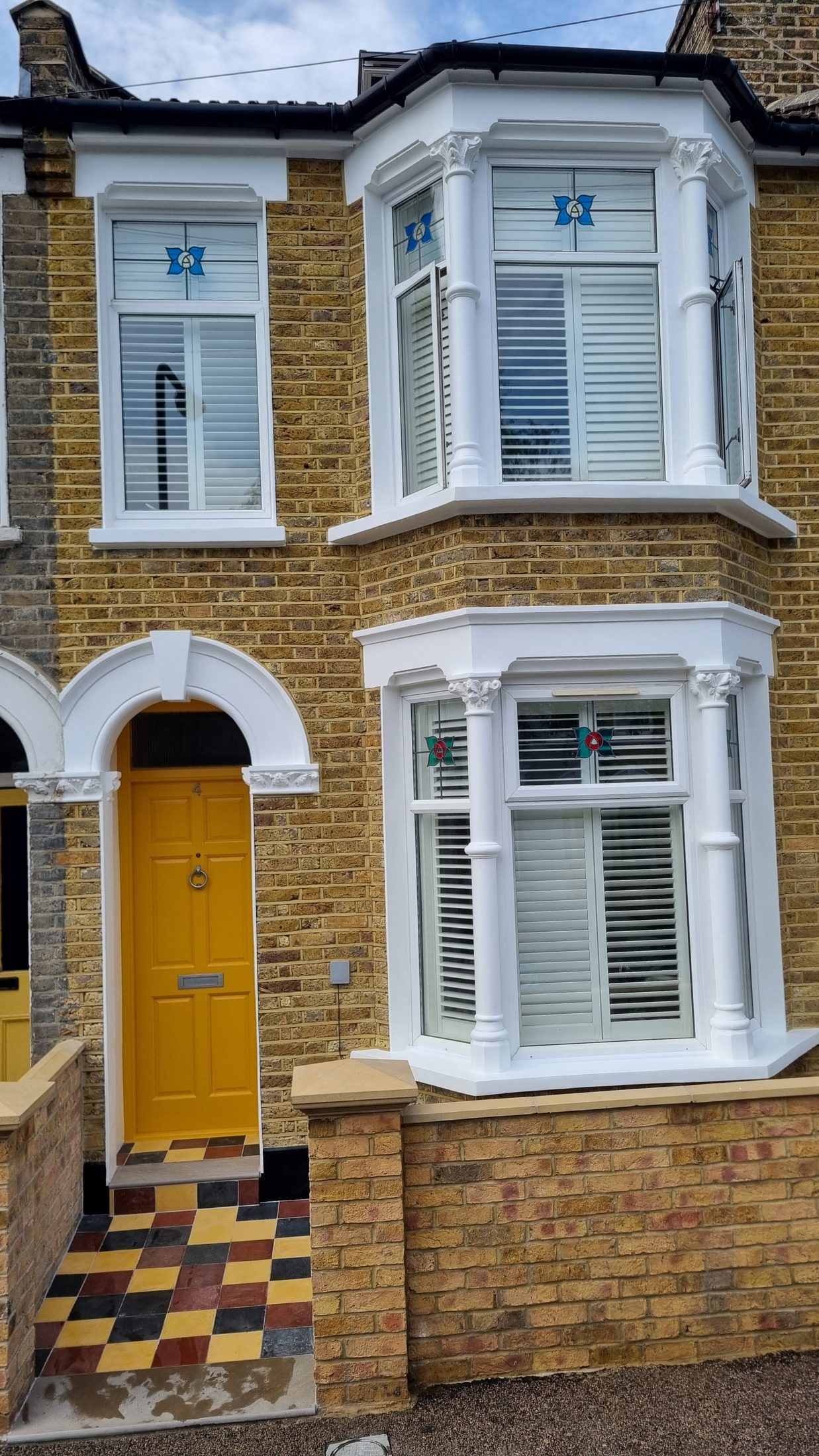
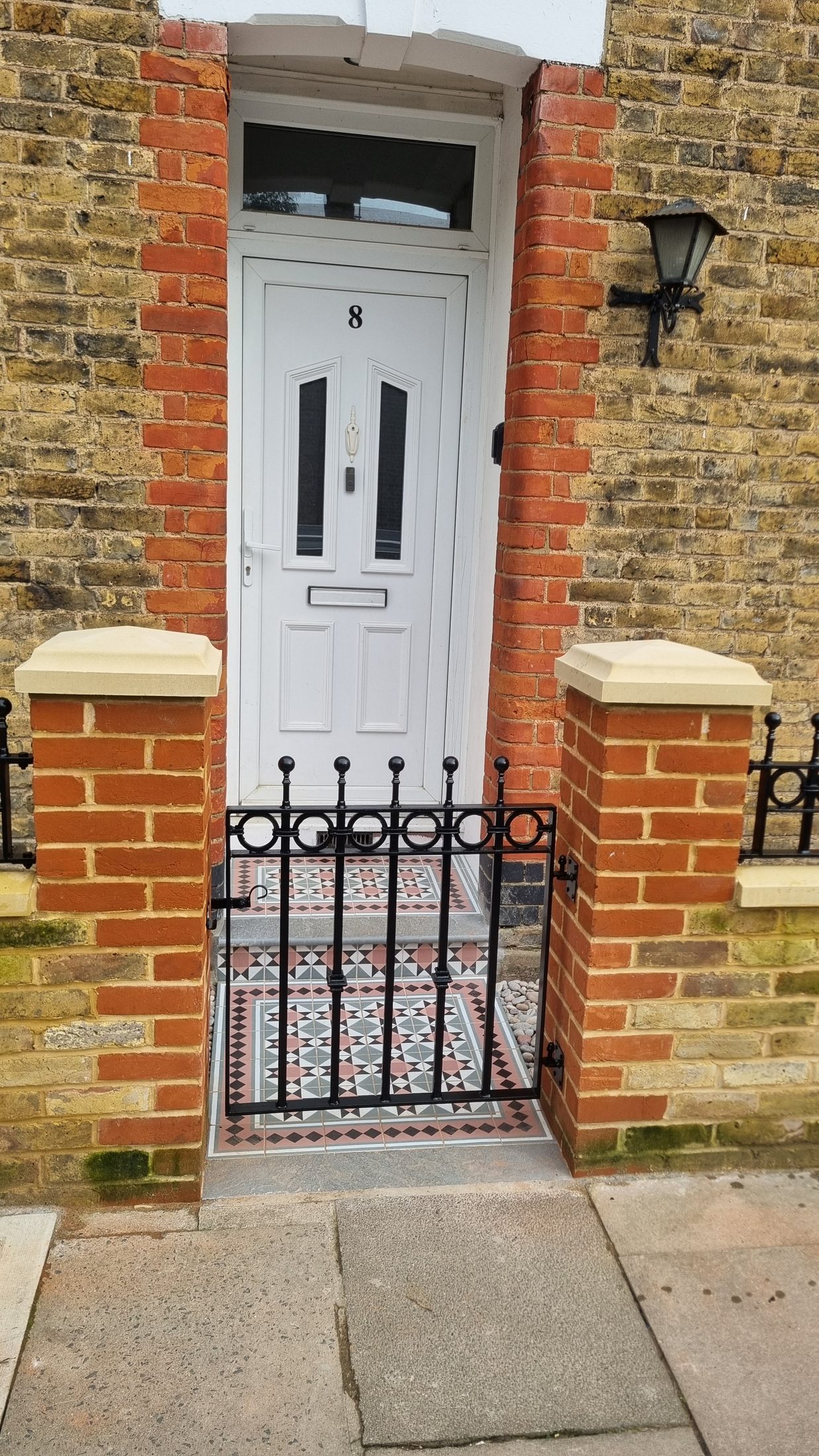
Honest, specific, no price list.
Real questions, answered honestly.
Can you remove paint from my front?
On stock and most period brick, yes. The right method is a chemical poultice — painted on, covered, left to act, peeled off. Slow, careful, the brick comes through intact.
Where do you get matching brick from?
Salvage yards, mostly. London stocks and reds from the period are widely available secondhand and we have suppliers we use regularly. New repro stocks are available too, but the tone is rarely right against the surrounding course.
Will I need planning permission?
For a front elevation in a Conservation Area, usually yes. For a front garden wall above a certain height, yes. For repointing and material-matched repair, often no. We check at the consultation and submit the application if needed.
How do encaustic tile paths hold up?
Beautifully — for a hundred years and counting. Properly laid encaustic tile is harder-wearing than concrete and looks better the older it gets. Maintenance is an annual sweep and a wash.
Do you do the railings as well as the brickwork?
Yes, we project-manage the lot. Brickwork, stonework, ironwork, tile, gates, hinges, painting — by us or by specialists we trust, all under one programme.
Related: Period property restoration · Home renovations
Related reading.
Do you need planning permission to renovate a Victorian terrace?
Permitted development, conservation areas, party walls and building control — what needs permission on an East London terrace, what doesn’t, and what a conservation area changes.
Restoring a Victorian front elevation
What’s actually involved in bringing a painted-white Victorian terrace back to its original brick. The methods, the materials, and what to expect.
Why we charge what we charge
Honest writing on JAG’s pricing. What goes into a quote, where we sit in the market, and why our smallest project is £25,000.
Considering a external restoration project?
Request a consultation